Oskenmoor
Sign in

Here the newcomer goes down

Something sleeps beneath the isles.

  • Action RPG
  • Real-time combat
  • Dungeons and bosses
  • Quests

Checking your account…

You wake at Kestrelby with a club and twenty coins. Rats in the sewers first; then trolls in the caves, skeletons in the crypt, orcs behind their stakes, and the barrow where the Barrow Warden’s blade lies. Real-time fights, loot, bounties, old words spoken aloud.

Plays in your browser, on PC and phone. Your Google account keeps your adventurer.

From the log of

· Level — · last entry —, kept in your Google account

Play

Sign-in is unavailable: the account service is not answering right now.

A game by Worldweft Studio

From the Chronicle of Oskenmoor

The Moor That Sleeps Beneath

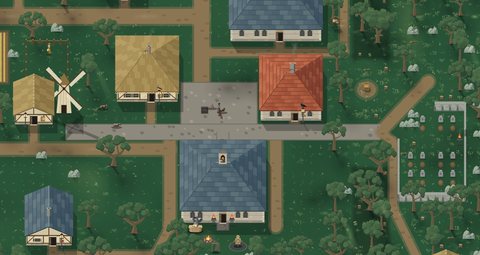
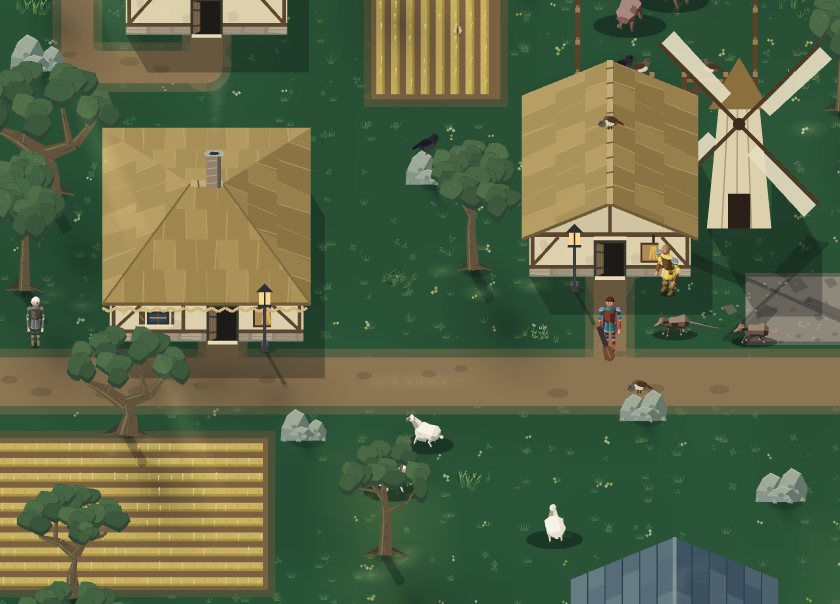
Kestrelby at noon: thatched cottages, the windmill, sheep and geese on the green, and the paved road to the square.
The windmill of Kestrelby, that turned before the Long Tide

Before the isles there was the Moor: one high country of heather, standing stones and barrows, kept by the Wardens. Beneath it lay a salt that shone, and the market town of Glimwich grew rich selling it. The Wardens had sworn it never would be sold. In the old tongue, osken means “the one who sleeps beneath”, and the salt was the sleeper’s sleep.

Seven lifetimes ago, in a single night, the Long Tide came in as if to put back every grain the Moor had carried off. Only the high places stood above the water, and became the isles. Glimwich lies in the middle of the Strait, and its bells still ring at low water.

What the sea left behind, it left hungry. Rats hold the sewers, trolls the caves, skeletons the crypt, orcs the north shore and the old fort. Under the middle barrow, past the worms, the Barrow Warden lies on his sleeper with his blade across his chest, and the Seer says the world turns on whether that blade stays where it is. This year the fog has not lifted, and the newcomers have begun going down.

Read the whole Chronicle

I. The Moor That Sleeps

Before the isles, there was the Moor: one high country of heather, standing stones and slow brown rivers, nine days’ walk from end to end. Its people had no king. They had the Wardens, who kept the roads, the wells and the barrows of the dead, and who spoke the old tongue, in which the world could be asked to change.

Beneath the Moor lay salt, and the salt shone. The market town of Glimwich grew rich selling it down every road: salt for the pot, salt for the dead, salt that glowed in a jar like a small moon. The Wardens had sworn never to sell it, and never said why.

In the old tongue, osken means “the one who sleeps beneath”. The salt was the sleeper’s sleep, and every cart that left Glimwich made that sleep a little lighter.

II. The Long Tide

It happened seven lifetimes ago, as the Hall counts them, and in a single night. Some say a Warden broke the oath and sold the salt himself. All agree on what the Barrow Warden did. He went down alone beneath the barrows with his blade, his horned helm and the oldest of the old words, and laid himself across the sleeper as a seal.

The seal held. Then the sea came in, as if to put back all the salt the Moor had carried off, and by morning the Moor was gone. Only the high places stood above the water: a round hill with a windmill, which became Kestrel Isle; the long headland of Gannet Head; the crag of Warhorn; the reed banks of Brackwater; and the ford of Thornmouth, the last crossing of the Moor road. The windmill turned before the Long Tide, and turns still.

Glimwich lies in the middle of the Strait. At the lowest winter tides its paving shows, and on still nights its bells ring beneath the boats of Brackwater. Once a year, on the Night of the Long Tide, the isles ring every bell on every quay in answer, and on that one night the dead of the barrows walk. Pilots speak of the Hollowback, a serpent as long as a quay, which swallowed the Moor road and lies along it still. What the sea keeps, the sea is minding.

III. What the Sea Left Behind

The barrows remained, and so did everything under them. The sea drowned the Moor; it did not drown what the Moor had buried.

Rats the size of hounds took the sewers under Kestrelby’s square. Their king, Old Gnasher, comes out every other day with two rats at his back, and the town has learned to leave him be. Under the hill the Kestrel Dungeon runs floor by floor: rats, spiders, a wolf den, and below that a hall where the trolls sit by their braziers. Trolls keep the west cave too, under a Troll Guard who wears a crown of thorns, and goblins pick over the trolls’ leavings and throw stones at anyone who comes down the stairs. In the fields and the South Woods the wolves hunt in packs and the bears strike slow and hard. In the marsh by Brackwater the swamp trolls are poisonous. Nearly everything down there bites, and some of it bites twice.

Under the north-east graveyard the crypt goes down three floors. The bones there stand up when you come in, and every blow they land takes a little of your life for themselves. Under the middle barrow the mireworms gnaw at the roots of the isle, and at the bottom of their warren the eldest, Grubmaw, lies across the way to the Barrow Warden’s tomb. It is said to remember the taste of the Moor.

The orcs were Moor-folk once, the salt-diggers, or so the orcs say. After the Tide the isles blamed them and drove them out, and they came back with spears. Now they camp behind a ring of sharpened stakes on the north shore of Kestrel Isle, where the salt was once loaded, and they hold Warhorn, the fort the last Wardens built to watch the sea. Their raiders shout before they strike, and the blow still hurts. Their spearmen throw from farther than you can run. One of them, hooded, trades with any traveller who greets him in his own tongue. The old tongue was theirs too.

IV. The Wardens Who Remain

The office survived the Tide, if not its power. In the Wardens’ Hall at Kestrelby, Warden Hale hands out the hunting orders: twelve rats for the granary, the wolf pack at the fence, the trolls in the west field, the orcs behind their stakes. Each pays a bounty, and each done order is a notch in a tally stick. Four notches make a warden. Above the Hall lives the Seer, who listens to the tide the way others read letters, and who would rather no one went down to the barrows at all. Every newcomer ends up serving them both.

The temple at Kestrelby keeps no god. It is the house of the word aro, the word of life, and Elder Corwin teaches it to anyone who will stay the winter. Kesh is the word that strikes. Ume is the word of the body, and makes it swift. Smaller words bend them: wider, farther, alight. You speak them aloud, and the isles hear. Few remember more; the Seer says more will come, when the time does.

Those who prove themselves are sent up the stair. At the eighth mark, the Seer is to name their calling and send them across the water to the mainland, where the old roads of the Moor are said to climb back out of the sea. That is the hope the isles live on: that one day the sea might give the Moor back.

V. Why You Came

You wake in the temple court with a club, a jacket and twenty coins. It is the oldest custom of Kestrelby, older than the Hall: every newcomer is given twenty coins, the fare across the Strait to Brackwater, so that no one is kept on Kestrel Isle against their will. No one mentions the fare back.

Newcomers always come the same way, on a night of fog, in a boat with no boatman. Their coins are old, stamped with a face no one on the isles remembers, and crusted with salt. No one in the Hall remarks on it, though Elder Corwin sometimes looks at a newcomer twice, as if he knew the face.

Newcomers always do the same things, too. They kill the rats on the square with the club. They buy a torch from Old Jory and go down the grate in the paving. They come up with teeth and hides for Hobb the tanner, buy a sword at Garrick’s, and go down again, deeper each time: the dungeon, the west cave, the crypt. They take the Warden’s orders and cut their notches. Then they walk out to the north-east graveyard, to the stair under the middle barrow, and go down into the Wormwarren.

This year the fog came early and has not lifted. The keeper of the light at Gannet Head has seen lamps moving under the water. The kittiwakes have left their hold on the cape, and the isles have a saying for that: when the kittiwakes leave, count your coins. The dead walk now on nights that are not the Night of the Long Tide.

It began the week the newcomers started going down to the barrows. In the far chamber of the Wormwarren, past Grubmaw, lies the Barrow Warden’s tomb, with his blade and his horned helm. For seven lifetimes the Seer has said the same thing: when that blade is lifted from the tomb, the sea will give back what it took, or take the rest.

The newcomers are lifting it. Here begins your chapter of the Chronicle.

Sayings of the isles

  • What the sea keeps, the sea is minding.
  • When the kittiwakes leave, count your coins.
  • Salt for the pot, never for the purse. The Wardens’ oath, as the isles remember it.
  • Nothing down there is asleep. As the Hall says.
Four scenes of the crossing

Of the Isles, and What Waits in Them

Seen from above, through day and night, rain and gale. You play at your own pace, and the game keeps every step.

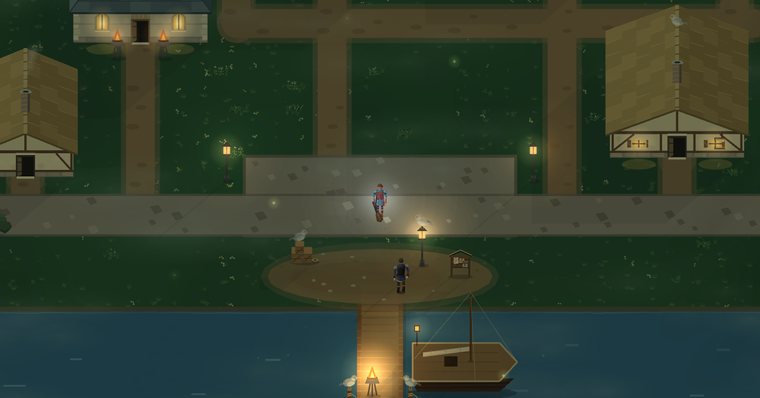
The quay at Brackwater in fog, a boat moored at the jetty and lamps lit along the square.
Brackwater quay, in the fog

Four Harbours on a Grey Sea

Four towns, each with its folk, its errands, its healer, and something older under its cellars: rats in Brackwater’s salt cellar, skeletons under Thornmouth’s granary, worms under the cape, and two Troll Guards holding the ford. The boats cross over drowned Glimwich.

  • Kestrelby to Brackwater20 coins
  • Kestrelby to Thornmouth30 coins
  • Brackwater to Thornmouth15 coins
  • Kestrelby to Gannet Head20 coins
  • Thornmouth to Gannet Head10 coins

Twenty coins is the fare to Brackwater. No one mentions the fare back.

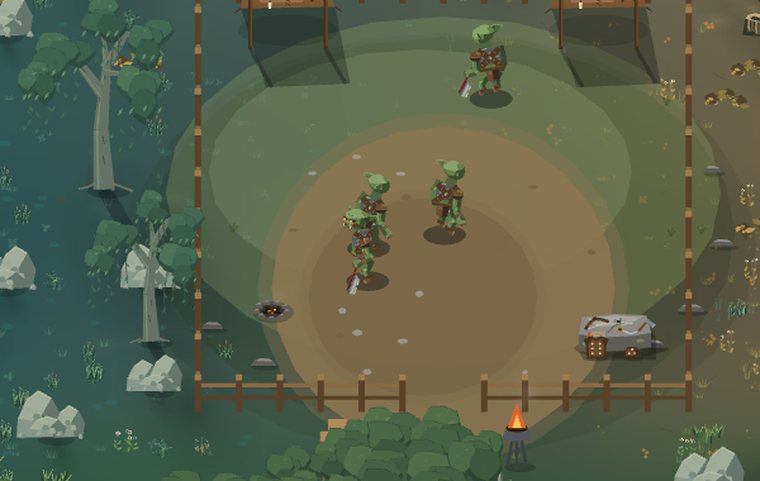
The orcs’ staked camp: a clearing ringed by a palisade, with orcs on guard among the trees.
The orcs’ staked camp, on the north shore

Steel and the Old Words

Fights are in real time: move, aim, strike, dodge. Speak kesh to strike and aro to mend, hurl your weapon or loose arrows from afar, and slip aside with a dodge of two charges. Goblins throw stones, spearmen throw spears, skeletons drain your life, and bosses guard the stairs down. Every foe asks its own tactics.

One of the orcs, hooded, will trade, if you know the right words.

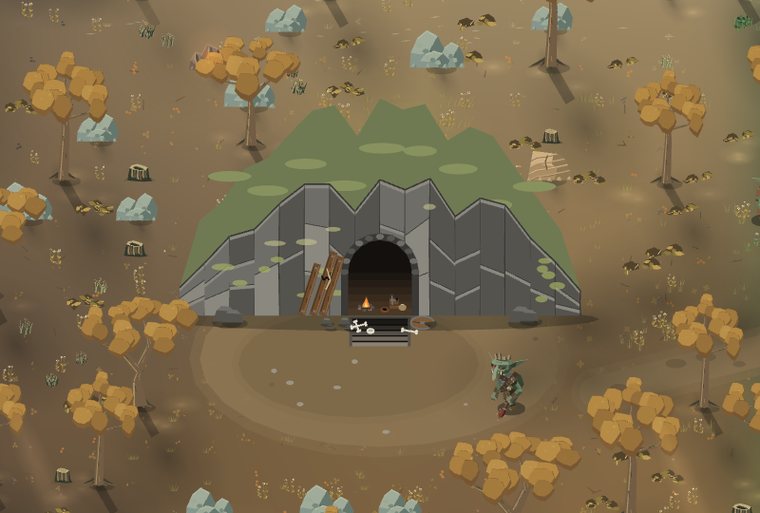
The mouth of the troll cave among autumn trees, a torch burning at the entrance.
The troll cave, in autumn

Of Hunts Kept While You Sleep

Choose a style and a hunting ground. Your adventurer fights, loots, rests, sells in town and comes back alone. When the hunt ends, a summary tells you what it earned and what to change.

  • Carefulheals early, hunts for 15 minutes
  • Balancedthe default, 30 minutes
  • Aggressivetakes on anything, for an hour
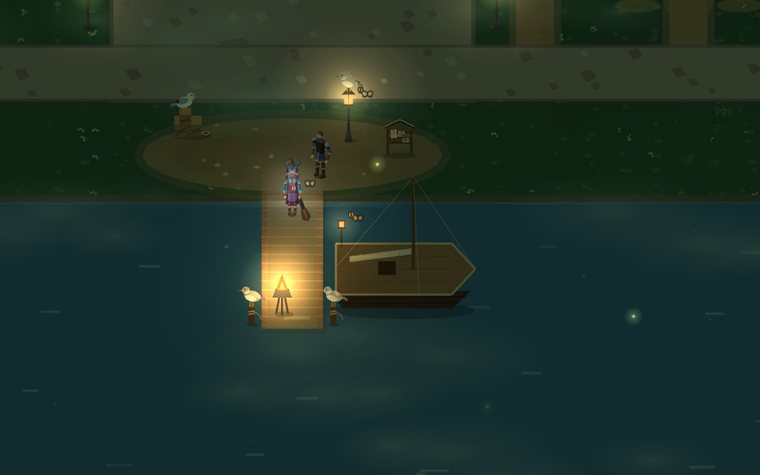
A jetty at night, a lantern burning beside a moored boat on dark water.
A late crossing, by lantern light

Of the Chart in Your Pocket

Play in your phone’s browser, upright or sideways, with touch controls made for the thumb. The game saves every 15 seconds and when you close it, so you can leave at one quay and return at another, on any device.

Your Google account keeps the log.

The Hours of the Isles

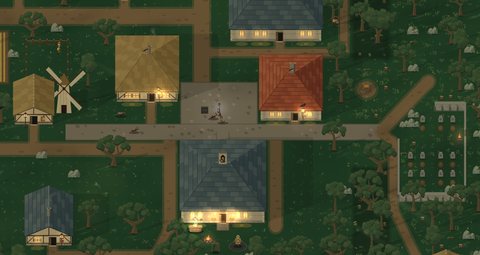
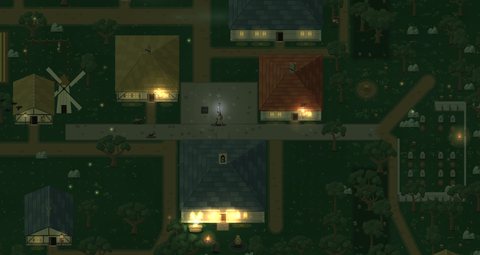
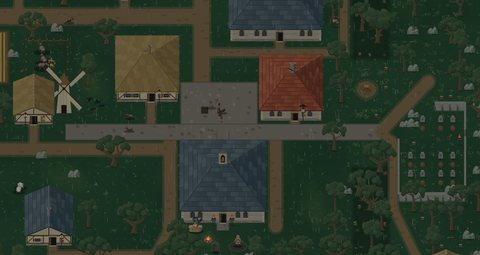
The same square in Kestrelby, from noon to the dark and into the rain.

The square of Kestrelby at noon.
Noonbright and busy
The same square at dusk, the first windows lit.
Duskthe first lamps
The square at night, lit by lamps and windows.
Nightlamplight only
The square in the rain.
Rainoff the western sea

Version notes

The Ship’s Log

Every change to the isles is entered here, the newest first.

Read the whole log

v0.96.0 · 2 November 2026

Names over the creatures, quests that pay experience, and a safer save

  • Hostile creatures show their names over their health bars. Settings, Gameplay, Creature names turns them off.
  • X, or the NAMES button on a phone, names every thing lying on the ground within 5 squares: each item of a loot pile with its count. The lines keep clear of the creatures’ names.
  • Every quest now gives experience when you finish it, about a quarter of a level at its level. A new one in Kestrelby: Penrose’s old ledger waits behind a stuck door in the sewers that only a pick will break.
  • The towns go to bed at their own hours, window by window, and the shops and houses have proper furniture: counters, a tavern bar, beds with blankets, the smith’s anvil.
  • With the Auto or active training on, the game keeps playing in a hidden tab or a window without the focus, with its sound off. The skills window and the site’s Account page show your time played.
  • The Auto can store whole kinds of items in the depot, finds its way down to the depot chest from any corner of Kestrel Isle, and each attack spell can be kept for or from one creature.
  • Your save is safer: an older game never takes a save a newer one wrote, a second tab of the game stays out of the first one’s save, and the save you did not pick at “Which save?” is kept beside it.
  • Signed in on the site, your adventurer’s mark opens a menu with Play, Account and Sign out. The Account page shows your character as the cloud keeps it.
  • On the smallest phones the home page’s Sign in with Google and Continue buttons now fit on the first screen, with no scrolling.

v0.95.1 · 2 November 2026

Shadows that follow the sun, and a new home page

  • You, the creatures and the people now cast the sun’s shadow from your feet. It is long and leaning in the morning and the evening, short at noon and soft under clouds and in fog. At night, in the rain and indoors only the small round shadow under your feet stays.
  • The home page is a woven tapestry. The banners of the five towns hang on a rod above a first screen that tells what the game is and where to find it.
  • On the Web page, signing in no longer asks the service for earlier saves it does not offer yet, so the browser’s console stays clean.
  • Every floor’s rope holes, passages and quest doors paint over their own floor again, however many floors the map holds.

v0.95.0 · 2 November 2026

Leaving to the home page, a fuller map and Captain Pell’s tower

  • On the Web page, leaving the game no longer leaves it frozen on its last screen: Train and quit and the menu’s Quit save and take you to the site’s home page, as the menu’s Home does.
  • Esc with the menu open closes it and puts you back in the game, without the menu flickering open again. A phone’s back button does the same.
  • The big map fills its panel at every zoom, with no plain green bands beside the picture, and the maps are drawn a band at a time so the first seconds of play stay smooth. On a phone the errands’ gold “!” is bigger, ringed in white.
  • A ruined stone tower stands in the north. Its stairs go down three floors, past poison spiders and skeletons, to Captain Pell’s floor and his crate.
  • The shovel digs. In the north-east graveyard the middle grave opens under it, and the hole drops you into the Wormwarren among the mireworms. The hole stays open, and your save keeps it.
  • Wren in the Wardens’ Hall cellar teaches the orc tongue for a smoked eel. Afterwards the Hooded Orc greets you as a friend and opens his shop.
  • The sea takes the sky’s colour at dawn, at dusk and under cloud. Rowing boats lie moored at the quays, and pot floats bob offshore.
  • On the upper floors the sun comes through the windows in soft patches that move with the hour. The old dungeon halls are laid with worn flagstones, and each upper floor has a rug.
  • When the Auto goes back to town, the chat says what it stored in the depot and the gold it deposited, and tells you when it cannot reach the depot chest or the banker.

Before you sail

Asked at the Quay

Do I need to install anything?

No. Oskenmoor runs in your browser, on a computer or a phone. A version to install on Windows and Mac is on its way.

Can I play with other people?

No. Oskenmoor is a single-player game. It only goes online if you want to carry your save to another device.

Does it work on a phone?

Yes, in your phone’s browser, held sideways or upright, with touch controls. On Android the game opens full screen.

Do I lose my progress if I close the tab?

No. The game saves every 15 seconds and when you close it. Without an account, the save stays in that browser. Signed in with Google, it follows you to any device.

What happens when I die?

You lose a little experience and wake in town with full health. What you wore stays with you, but your backpack stays on your body for an hour. The map marks where it lies, so you can go back for it.

Where do I heal?

Healers mend you for free and cure poison: Elder Corwin, Guard Ulric and Guard Leofric in Kestrelby, Brother Alder in Brackwater and Maud in Thornmouth. Gannet Head has no healer.

Where should I hunt?

Open the big map. Each area shows its level range, in green when it suits you. The hunting grounds page has the full list.

Isn’t Auto mode cheating?

No. It is part of the game. You choose the style and the place, it hunts, and at the end the summary tells you what went well and what to change.

Why can’t I climb down that hole?

Rope holes need a rope, both to go down and to climb back up. Old Jory sells one in Kestrelby for 50 coins, and so do Orla in Brackwater and Hesper in Thornmouth.

Can I choose a vocation yet?

Not yet. The Seer, upstairs in the Wardens’ Hall, says the time has not come. Vocations and the voyage to the mainland are on the roadmap.

Roadmap

Waters Yet Uncharted

What is already on the chart, what is being drawn, and what lies beyond the Seer’s sight.

Charted

in the game now

  • Kestrelby, with its people, shops, errands and the training dummy.
  • Four towns on the isles, linked by boats: Kestrelby, Brackwater, Thornmouth and Gannet Head.
  • Sewers, a dungeon, a crypt, troll caves, the Wormwarren and hunting grounds up to level 14.
  • Day and night, rain, fog, wind, sound and music.
  • Auto mode, with three styles, routes, trips to town, a summary with advice, and hunts that go on even with a full backpack.
  • The game in your phone’s browser, sideways or upright.
  • Sign in with Google and carry your save to another device.

Being Charted

in development

  • Signing in on the installed game for Windows and Mac.

Uncharted

planned

  • The Seer and the choice of a vocation at level 8.
  • The voyage to the mainland, with a new town and hunting grounds up to level 20.
  • More spells, a bank and more quests.
  • Rings and amulets with real effects.

When the kittiwakes leave, count your coins.

A club waits for you in the temple court.

Every newcomer gets a club, a jacket and twenty coins, the fare across the Strait. The rats are in the sewers, the trolls in the caves, and the blade is still in the tomb. No one in the Hall will ask where you came from.

Sign in with Google